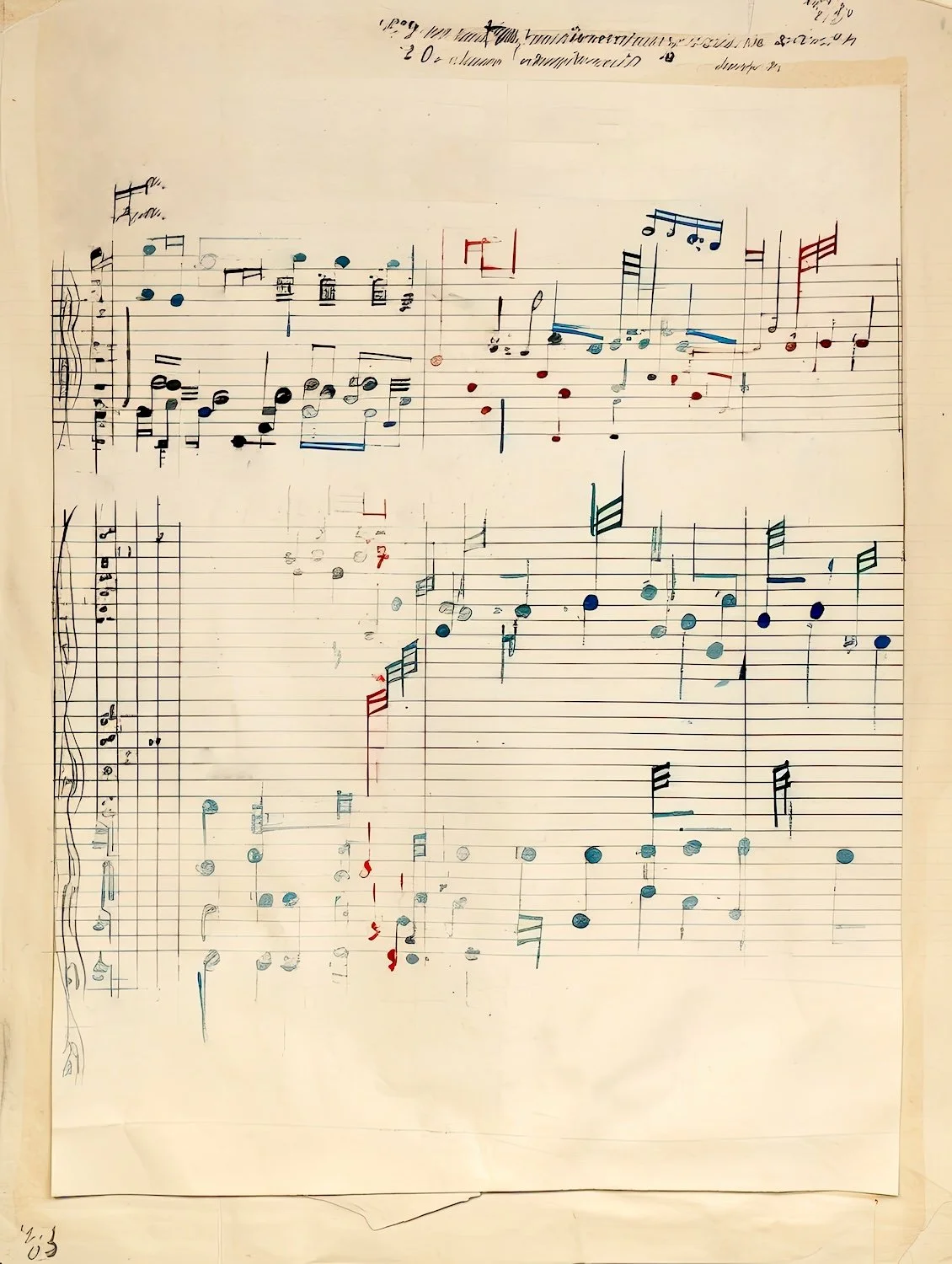
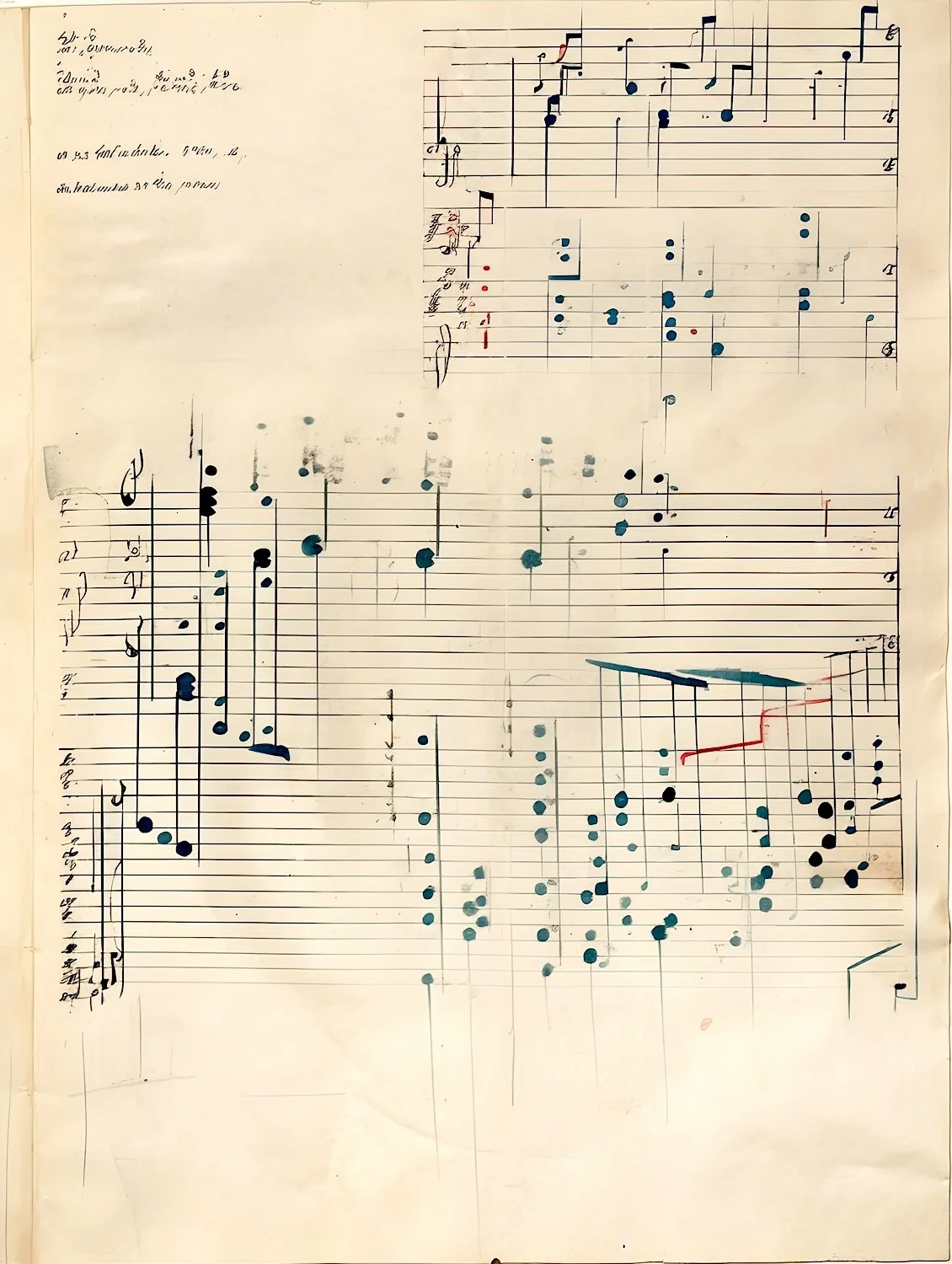
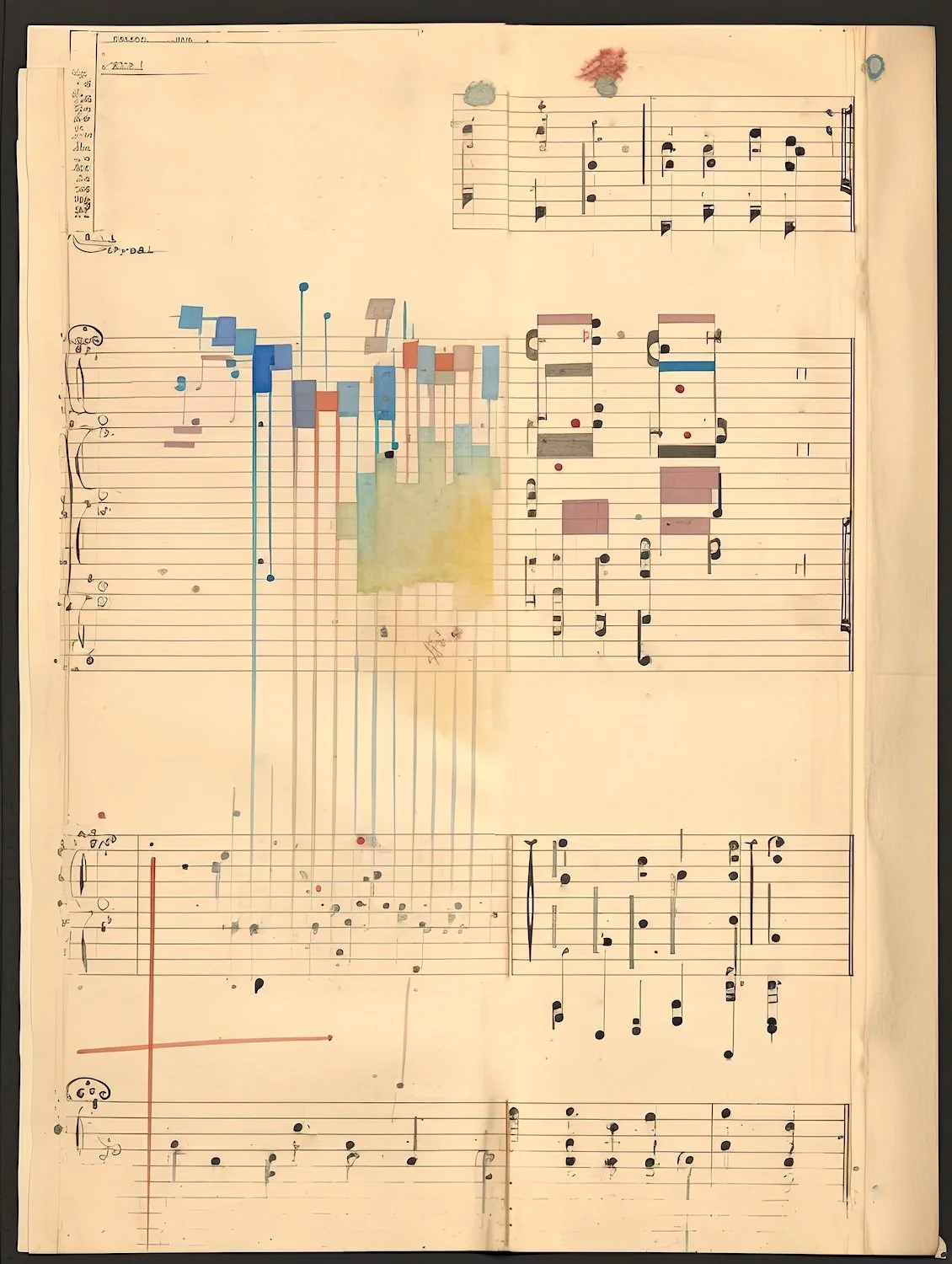
Executable Notation Series consists so far of following compositions:
• Clock Drawing Test (for e-guitar & tape-loops)
• I’m Perfectly Awake (for prepared piano & MPE keyboard)
• Walking Backwards - 10 Psychogeographic Maps (for ensemble)
• The Trod - Walking Along Fairy Paths (for fender rhodes)
• Satan’s Rhethoric (for Piano and Korg Triton)
• Dictionary of Topographic Forms (for Piano and Tape)
Executable Notations
Complicity with Artificial Imagination
• An ongoing series of Graphic Scores created in complicity with AI
• Premiered at the Klangbruecken Festival Hannover, 2023
• A full accompanying text on the project and its use of AI can be found HERE
CLOCK DRAWING TEST (2023)
(for e-guitar, tape-loops and fx pedals ad lib)
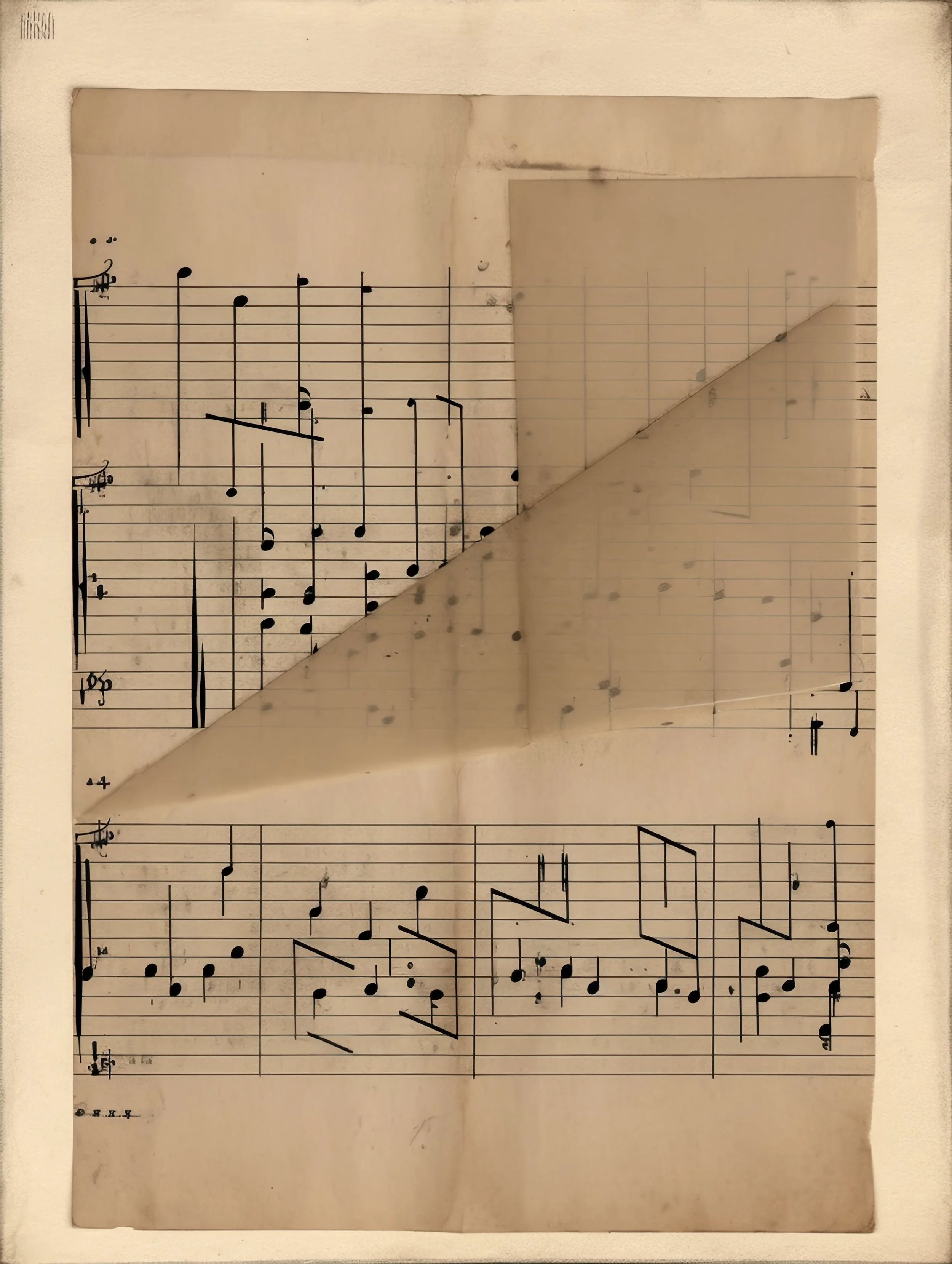
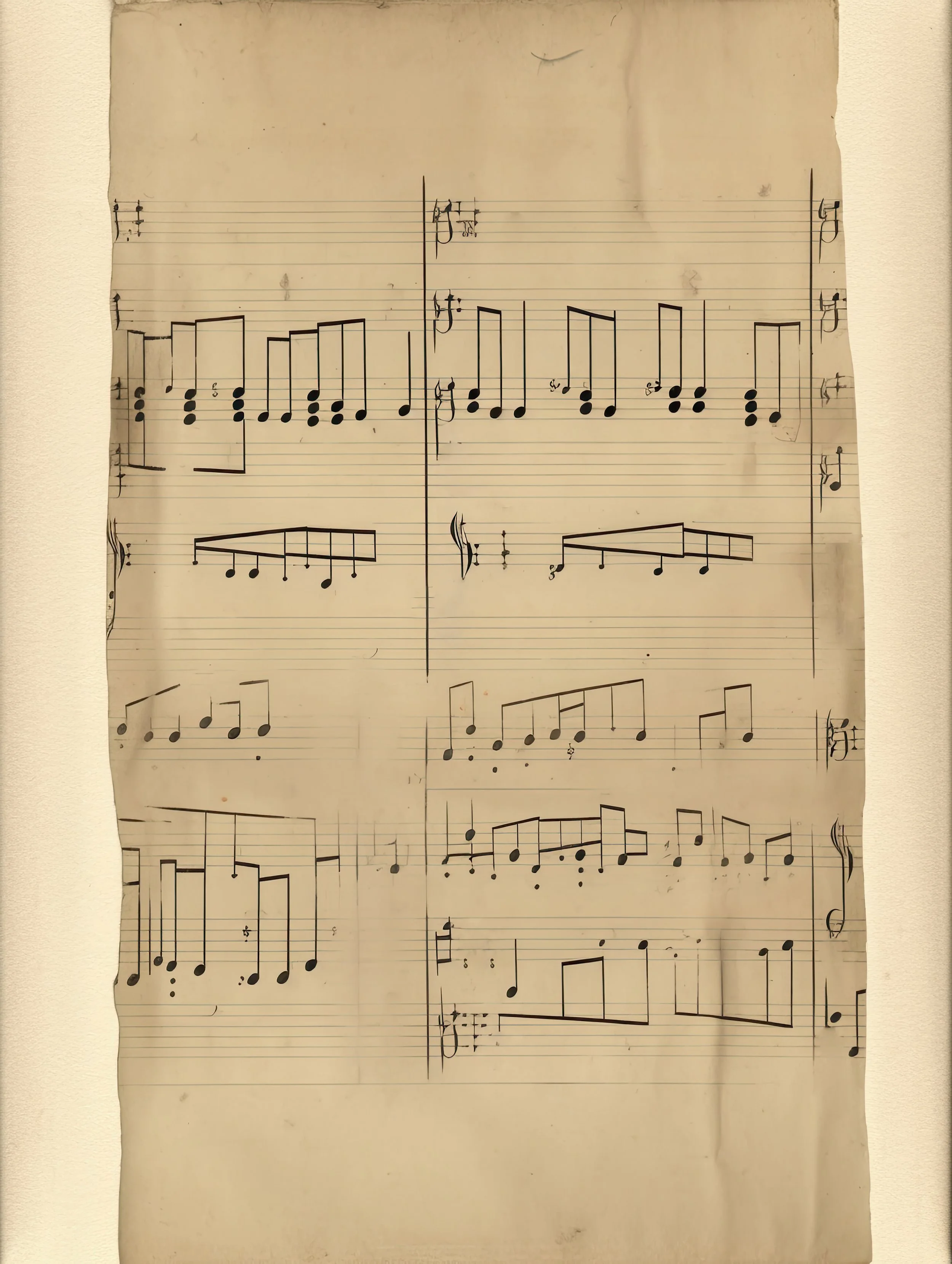
The clock-drawing test is a medical tool used to check for signs of dementia, including Alzheimer’s disease. The aim of the test is to see if there is any loss of a person's cognition. The clock-drawing test is able to detect mental decline as people with dementia often have problems reading traditional clocks. Some methods will award certain amount of points (e.g. 5 - 0) based on whether or not the sequence of numbers, the placement of numbers, and the placement of the hands are correct. Errors such as missing numbers, missing hands, repeated numbers, the wrong sequence of numbers, or the incorrect time can also factor into the interpretation.
The piece is a suite of 9 musical movements that explore the progression of dementia, memory loss and mental confusion. It begins with beautiful, sad daydreams that eventually lead to post-awareness existence in mental isolation. For each performance of the piece, it should include all 9 movements played in chronological order. However, it is your responsibility as a performer to build each movement out of scattered musical fragments. The two volumes of abstract musical notations represent a collection of memory fragments. They should be treated as building blocks that could be grouped together to create larger musical structures. As a suggestion, each movement should consist of one to six pages (taken in any order, from one or both volumes). Furthermore, certain pages may appear in more than one movement, representing the entanglement and confusion of misplaced memories.
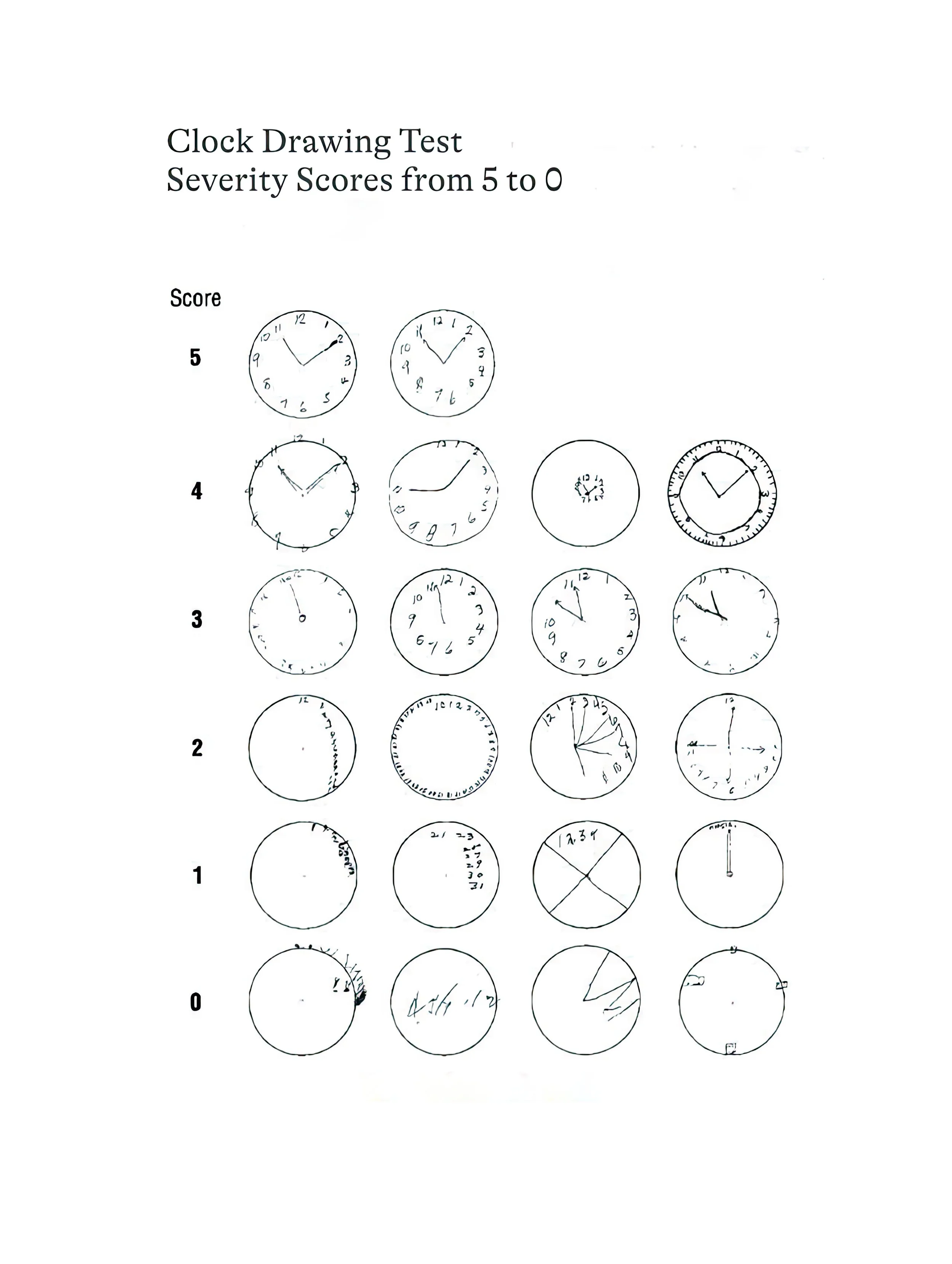


Clock Drawing Test
Premiered by Seth Josel
• "a white snake on a green hillside"
• "among the trees, a taste of moss in the mouth; green silence"
• "blind roads, neglected paths"
• "my eyes were on my feet"
• "lych ways”
• "the clink, the hum, the roar, the random singing"
• "tiny revolutions, advanced slowly in each step"
• "shadow-sites"
• "trod (the shades of green)"
• "tumuli, cloud ponds, holloways"
WALKING BACKWARDS - 10 psychogeographic maps (2023)
(for ensemble with instruments and found objects ad lib.)
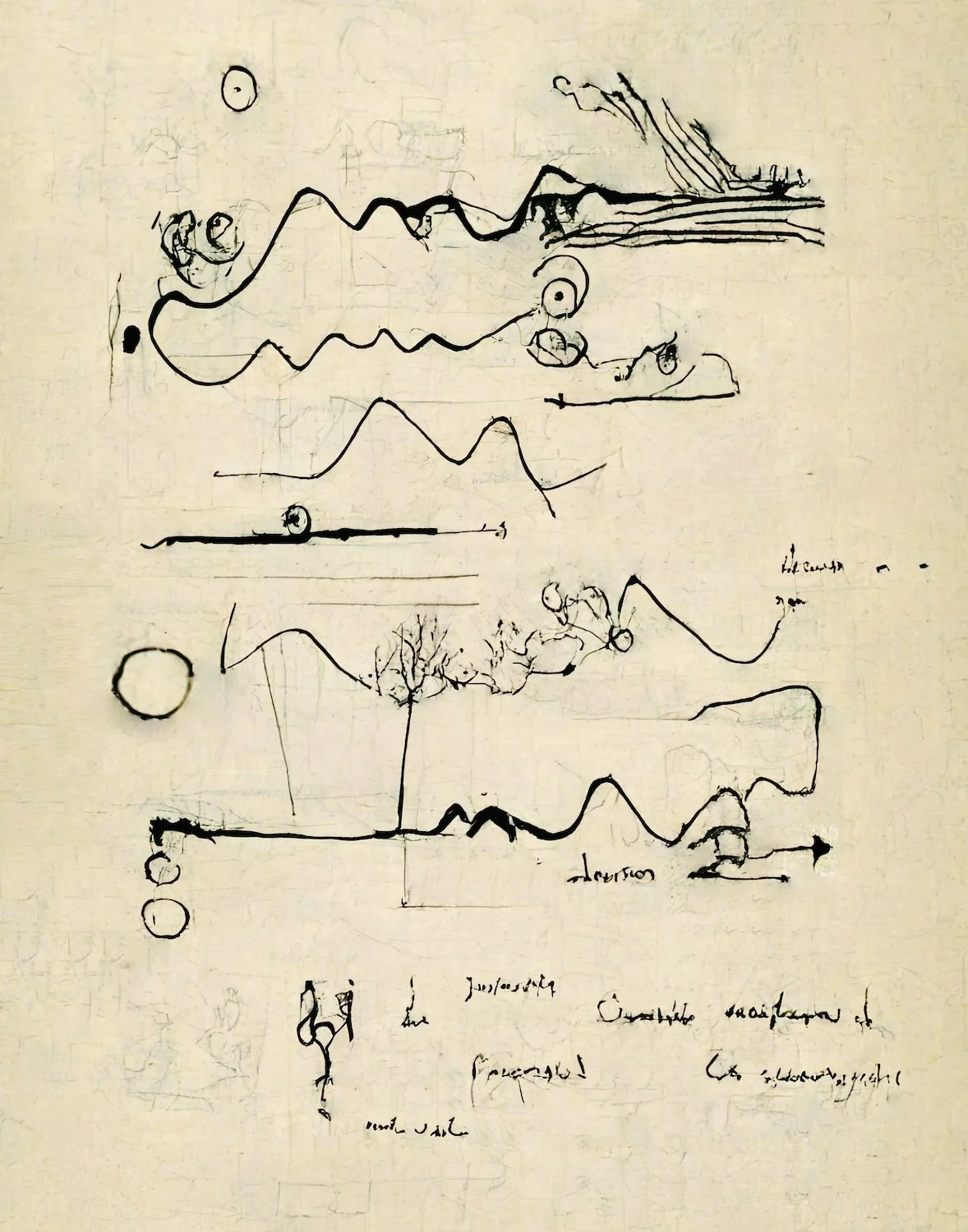
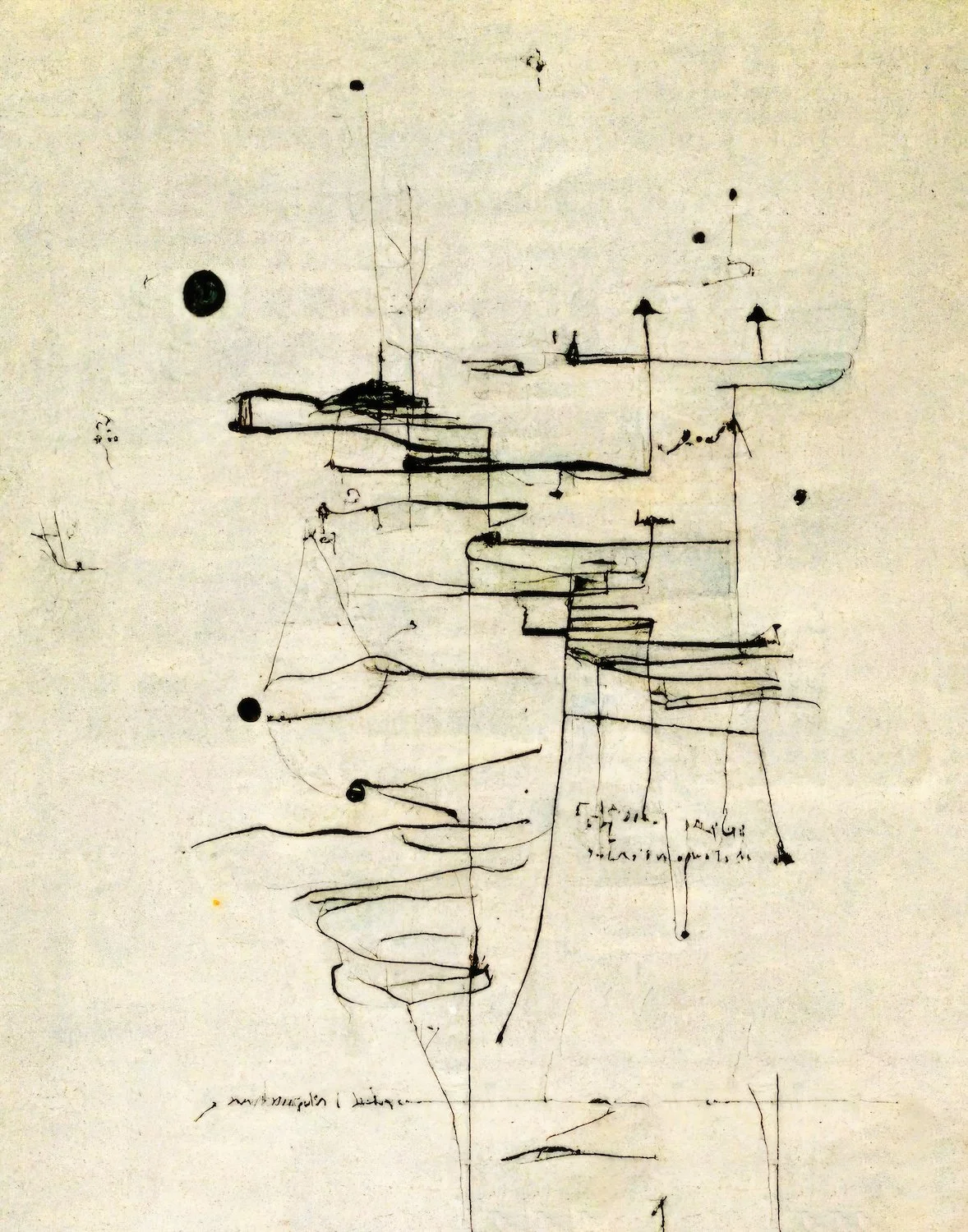
Walking Backwards is a stravaig compendium, a speculative hodology consisting of 10 psychogeographic maps for musical interpretation. Each map (see on the left) has one specific title, but It's your task though as a performer to pair maps with their corresponded titles.
Another element of the composition is a collection of small found objects, which represent landmarks. Objects should be treated as part of the musical score and possible elements of performance if you wish so. They can be put on maps (during the performance and in accordance with your own rules), which can affect the direction of your musical interpretation.
Each map is a distinct musical movement. All performers read/explore the same map. You can decide whether to perform all ten of them or just a selection (with a suggested minimum of 3 and maximum of 8). The minimum suggested duration of the performance is 20 minutes. Each map should be viewed as a space to temporarily "move in" and leave marks on, rather than contemplating or describing the imaginary landscapes through sounds and music.
Walking Backwards was inspired by the ways people understand themselves in terms of landscape. By topographies of the self, as well as maps we create to navigate these inversed terrains. When we think in place-metaphors, they not only adorn our thought, but actively produce and inform it. Think of this piece as musical itinerary spanning between the conceptual, the spectral and the personal.
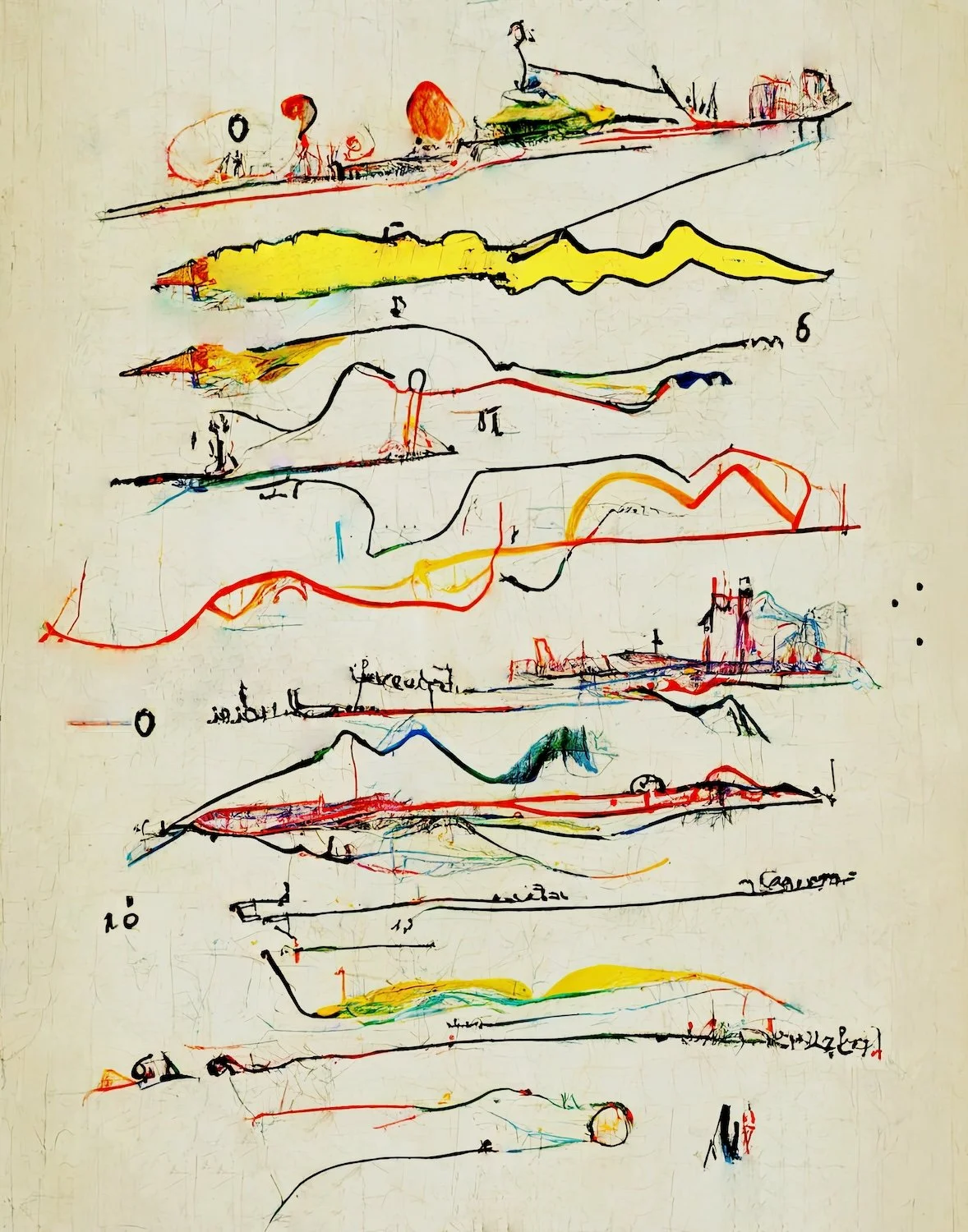
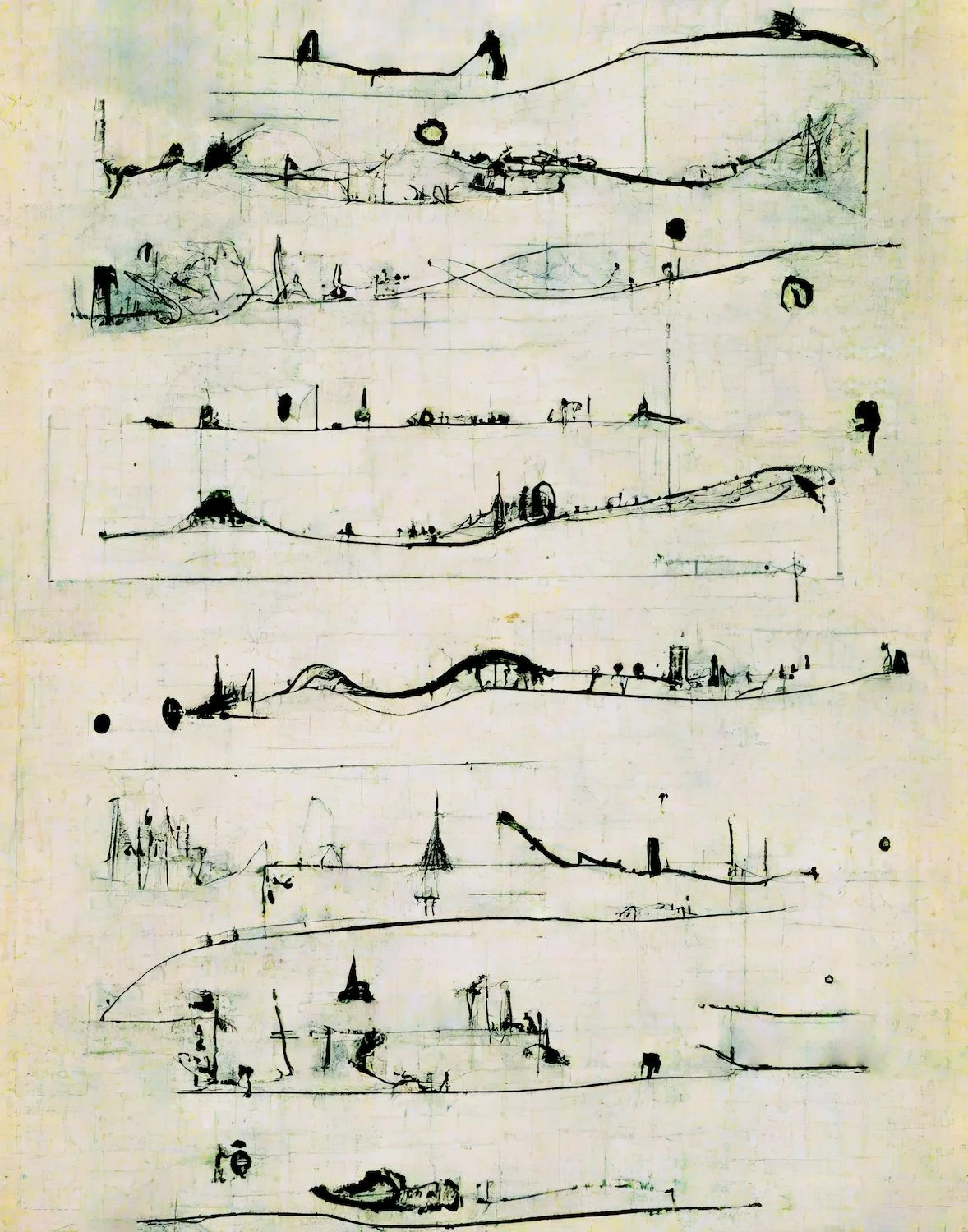
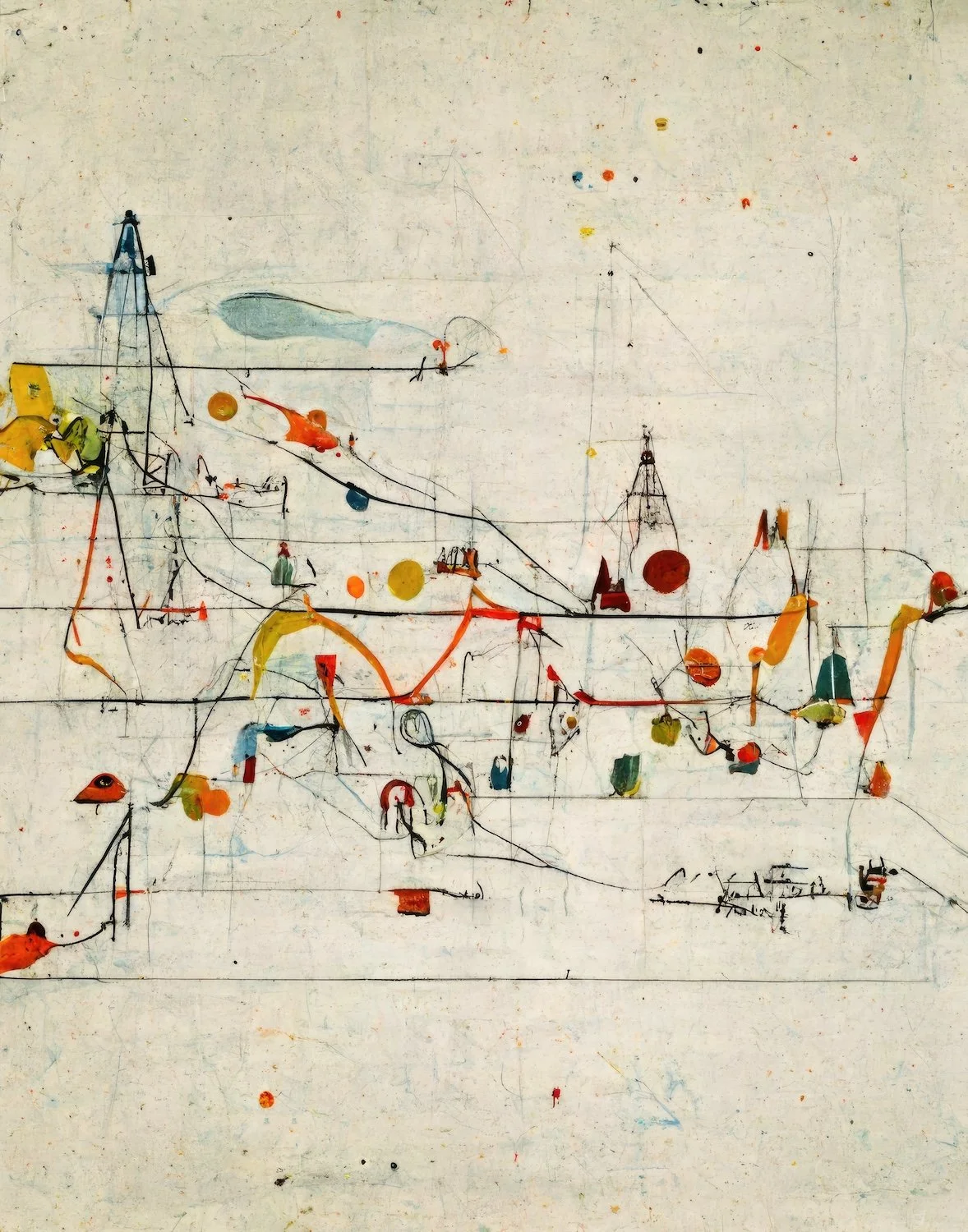
Walking Backwards
Premiered by ensemble hand werk

I’M PERFECTLY AWAKE - Amnesic Notations (2024)
(for piano an an MPE synthesizer)
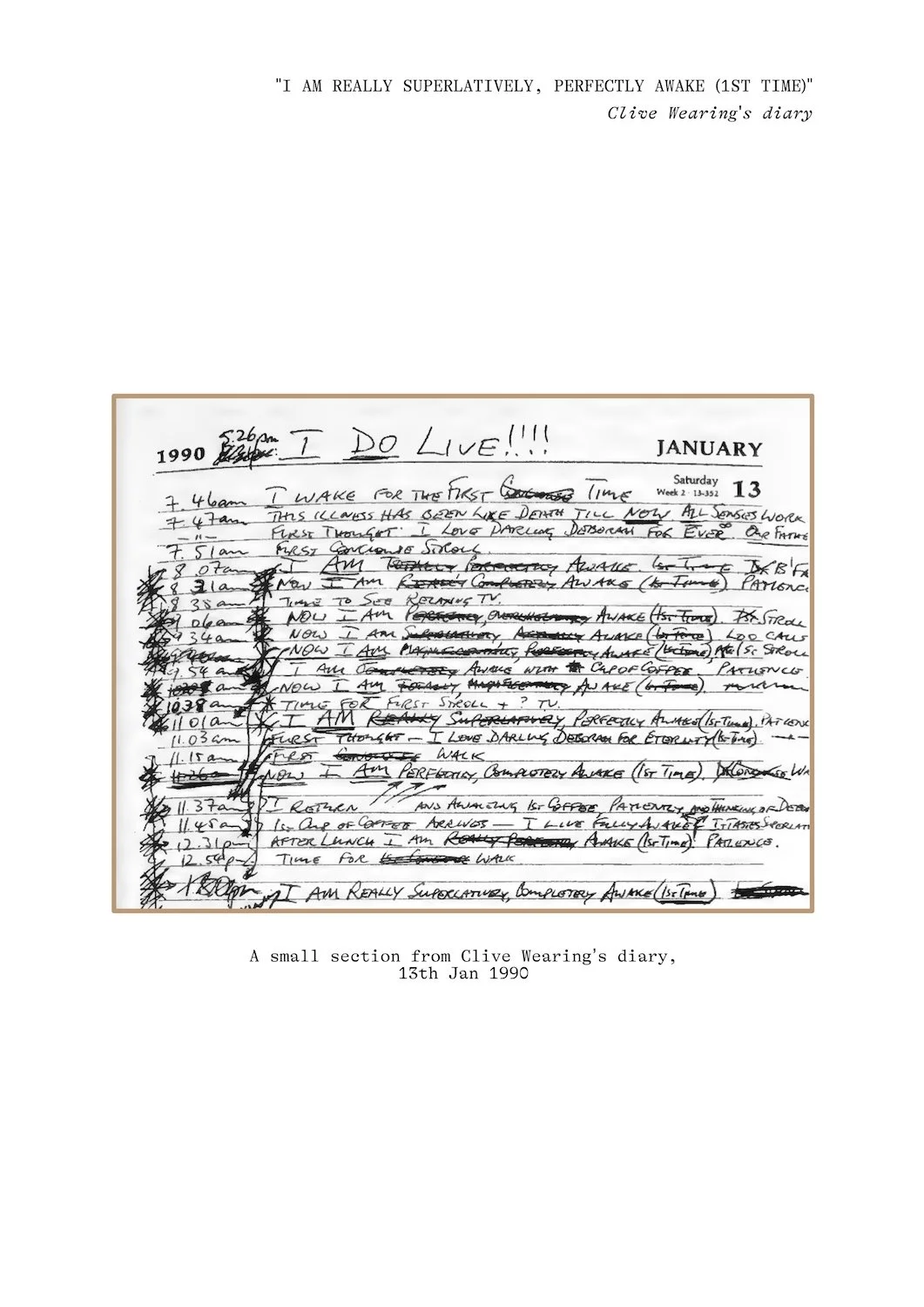
British musicologist Clive Wearing has one of the most extreme cases of amnesia ever known. In 1985, a virus severely damaged his memory-forming brain regions, leading to an extreme case of anterograde amnesia ever recorded and a memory span that lasts between 7 and 30 seconds. In addition to this inability to preserve new memories, Wearing had a retrograde amnesia, a deletion of virtually his entire past. He experiences a fresh awakening and a constant unveiling of the world anew every 7 seconds, as if he has just come round from a long coma —an endlessly repeating loop of awakening. His diary entries poignantly reflect his condition. Page after page was filled with entries similar to the following:
8:31 AM: Now I am really, completely awake. (crossed out)
9:06 AM: Now I am perfectly, overwhelmingly awake. (crossed out)
9:34 AM: Now I am superlatively, actually awake.
Earlier entries were usually crossed out, since he forgot having made an entry within minutes and dismissed his own writings. He did not know how the entries were made or by whom, although he did recognise his own handwriting.
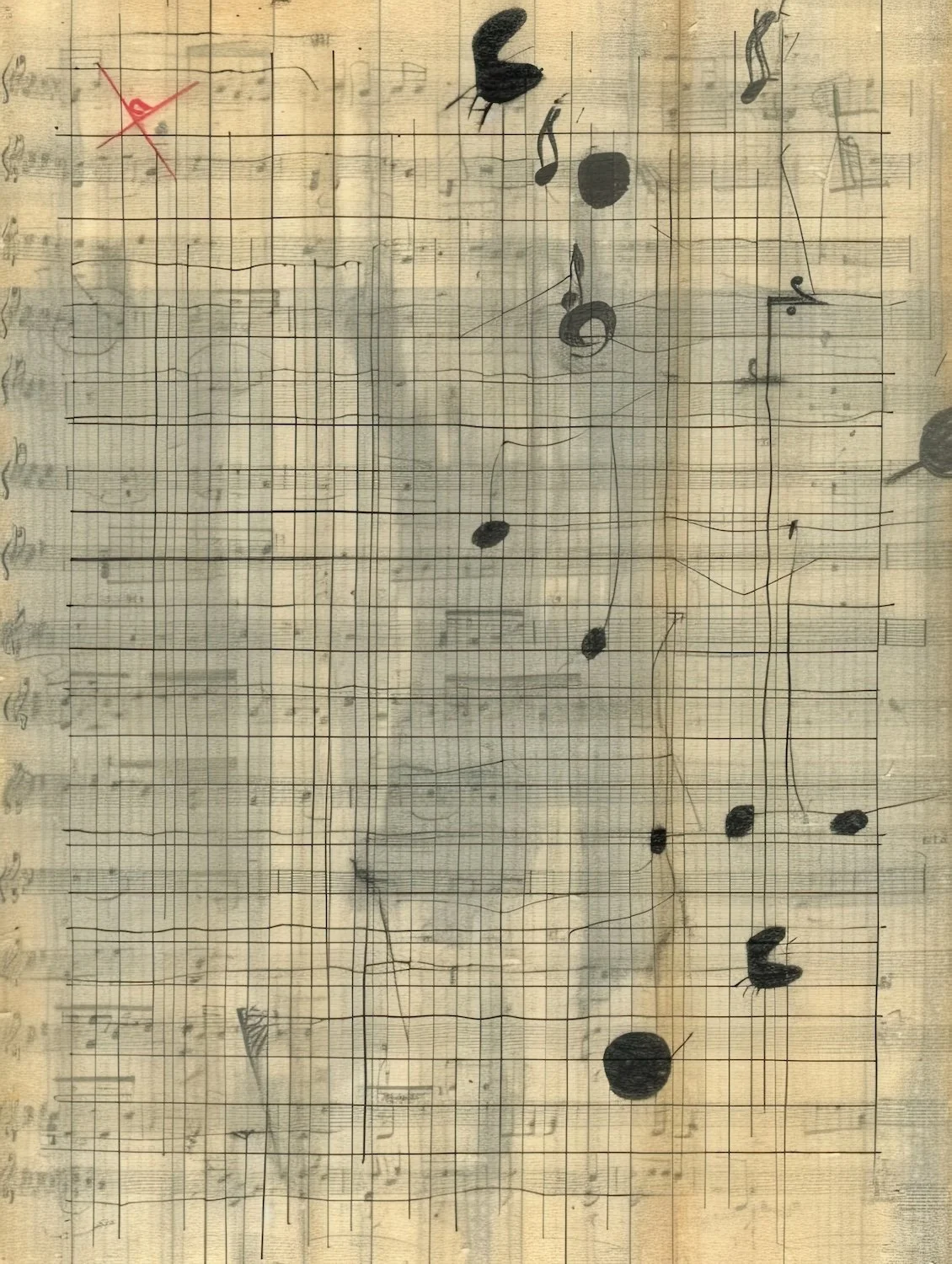
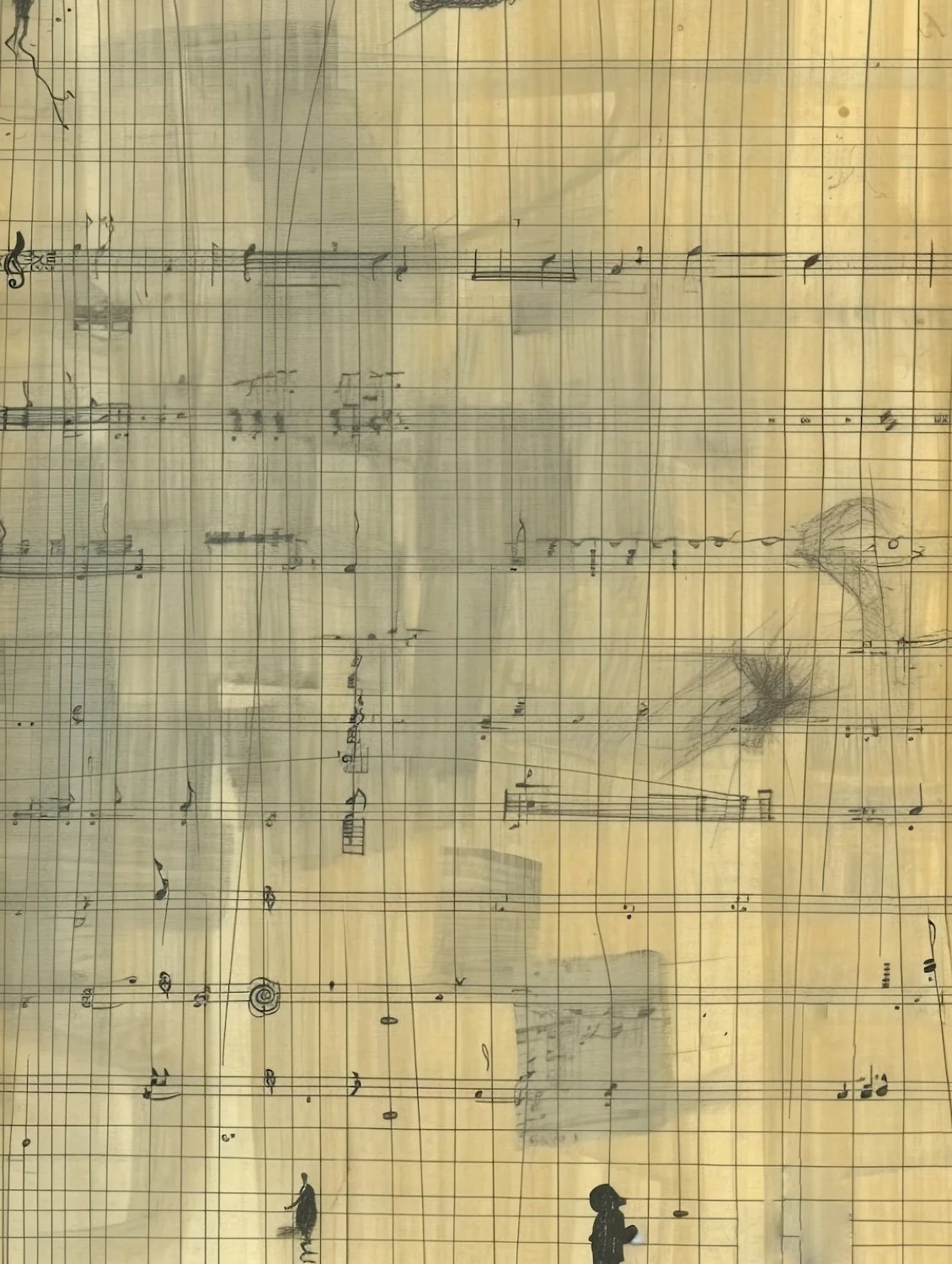
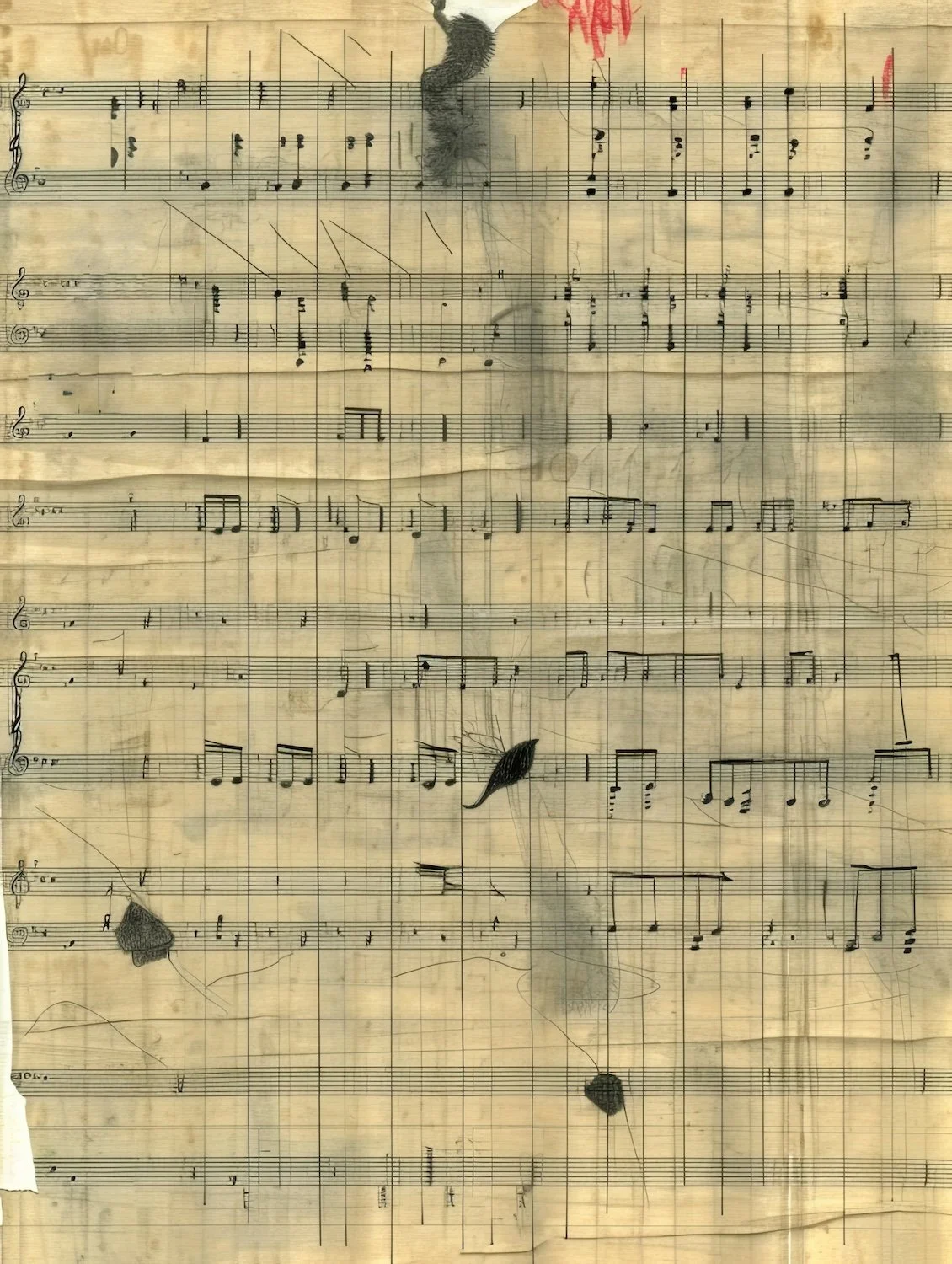
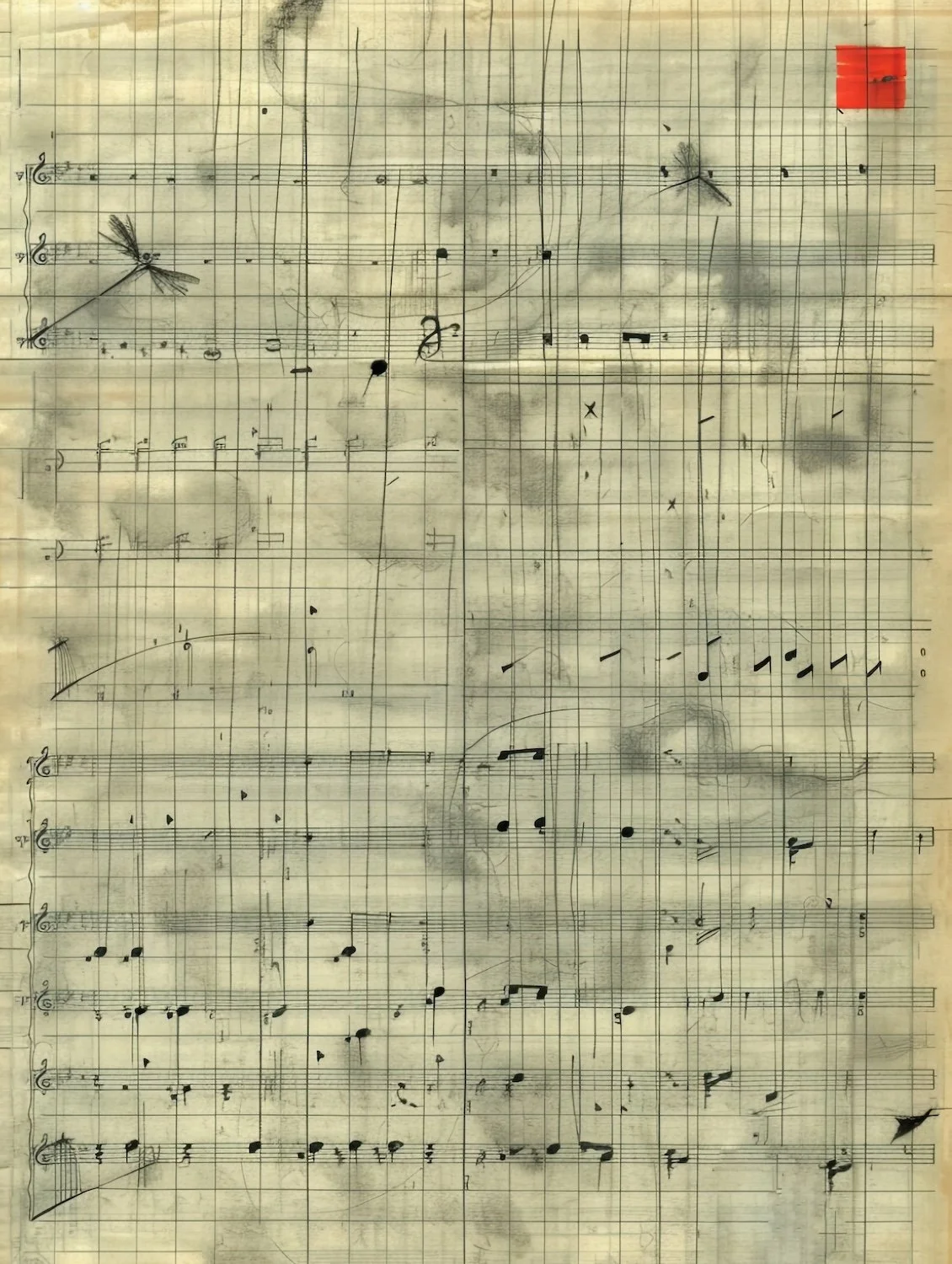
This piece is a fragmented suite that explores the states of amnesia, the inability to create new memories, and mental confusion. It’s an invitation to explore non-trivial flows of time based on disintegration of any coherent (musical) form and the impossibility of linear development in terms of musical interpretation.
It is important to understand that this notation, despite its abstract nature, is not a blueprint for improvisation. Instead, it’s a practical representation of states of mental confusion and the failure to plot any coherent narration. It’s a dysfunction of time as we experience it in our lives as well as loss of the self — on the side of the composer as well as the performer. Your responsibility as a performer and interpreter is to unlearn the way we usually track one fiber to another and forge the overarching sense of musical arrangement. Here, you don’t need to secure the flow of compositional consistency. Quite the opposite: try to explore this non-woven space by embracing its inevitable entanglement and obfuscation. You can think of this score as a fractal field of singular events, a never-ending chain of fresh beginnings without any overarching perspective.
I’m Perfectly Awake
Premiered by Malgorzata Walentynowicz
SATAN’S RHETORIC - two inquiries in demonic mediation (2023)
(for piano and Korg Triton - or similar 90’s ROMpler synthesizer)
“Demonology is not simply the study of demons, but of noise's assault on signal — a media theory avant la lettre” ()
“Demons do not deliver anyone’s message; the demon is the communication of noise, the mediation of nothingness,” writes Armando Maggi in Satan’s Rhetoric: A Study of Renaissance Demonology (2001), one of the sources that inspired this composition. Maggi examines how demonological treatises interpret possession through language, rhetoric, and performativity. In earlier theology, angels functioned as intermediaries between the earthly and the divine. But if angels exist to mediate between two realms, what happens when the intermediary fails—when mediation is negated?
This is the beginning of the story of the fallen angels: anti-angels that disturb, unweave, and disconnect. Medieval demonology contains a striking dialectic of communication and noise, connection and rupture. Maggi asks: if angels convey the word of God, whose words do demons speak? For him, demons do not transmit a message or a voice. In demonic possession, the demon becomes the communication of noise—a mediation of nothingness. Demonic language introduces disorder: where the angelic word connects speaker and listener, the demonic sign marks exclusion from meaning. What remains for the possessed is the inability to speak—a mouth that does not articulate but vomits; a language of babble and non-sense. Their “communication” manifests as hyper-communication (glossolalia), the unspeakable body (convulsions, vomiting), or silence (melancholia, catatonia). As Maggi writes, demons “speak in order to subtract presence from the world.”
For the performer, the central challenge is to sustain a double negation: neither treating the score as a blueprint for improvisation nor reading it too literally. Imagine a “traditional” score undergoing erosion—its musical substance fraying into noise. This is a non-woven field in which materials are no longer governed by linear compositional logic. The performer does not need to trace one thread to another or secure a coherent musical trajectory. Instead, follow the traces of an artificial, non-human possession. Navigate the entanglement rather than resolve it. Consider the fragments and pages as compositions within compositions—a fractal field of hyper-communication without a stable message.